


We will focus on the challenges and pressures of customers, provide competitive K30x35x13 Needle Bearing, 6010 Deep Groove Ball Bearing Axial Load, Chrome Steel Construction Works Linear Bearing for Machine and high-quality services, and continue to create maximum value for customers. Our company's technological research and development capacity and production capacity have been positioned and arranged in accordance with the international first-class level. With an honest and stable management attitude, we are committed to product research and development, enhance corporate competitiveness, and strive to improve customer satisfaction.
Products Description
Description:
WXING universal joint bearings are manufactured with cold forged or machined cup needle roller bearings, incorporating a closed end, and are for use in various types of application. They are used in the automotive industry, for joints in commercial vehicle propeller shafts, and also in other industries, for special applications.
WXING universal joint bearings (fig. 1) are available in various sizes and designs including:
designs that either require maintenance or are virtually maintenance-free
designs that are either open (without seals) or sealed
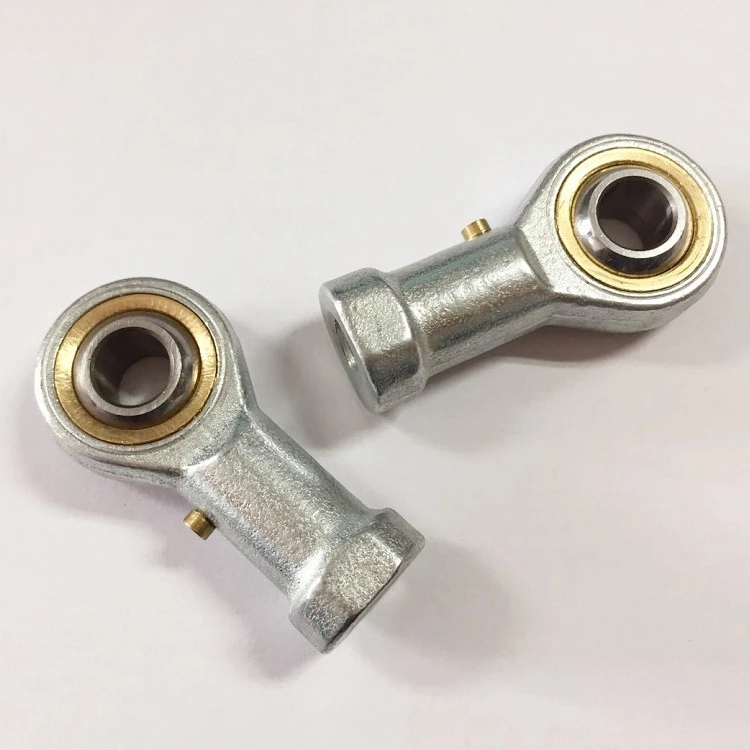

Rod end bearings (Bearing model query size encyclopedia) Rod end joint bearings Rod end joint bearings are a kind of joint bearings with rod ends or mounted on rod ends, which belong to a branch of joint bearings. 1 Catalog introduction 2 Type 3 According to size series 4 Rod end spherical plain bearing 5 Installation and disassembly 6 Installation and disassembly introduction Editing Rod end spherical plain bearing is a spherical plain bearing, and the basic type consists of an inner and outer ring with a spherical sliding spherical contact surface. The joint bearing is mainly composed of an outer spherical inner ring and an inner spherical outer ring, which can bear a large load. Depending on the type and structure, it can withstand radial loads, axial loads or a combination of radial and axial loads. 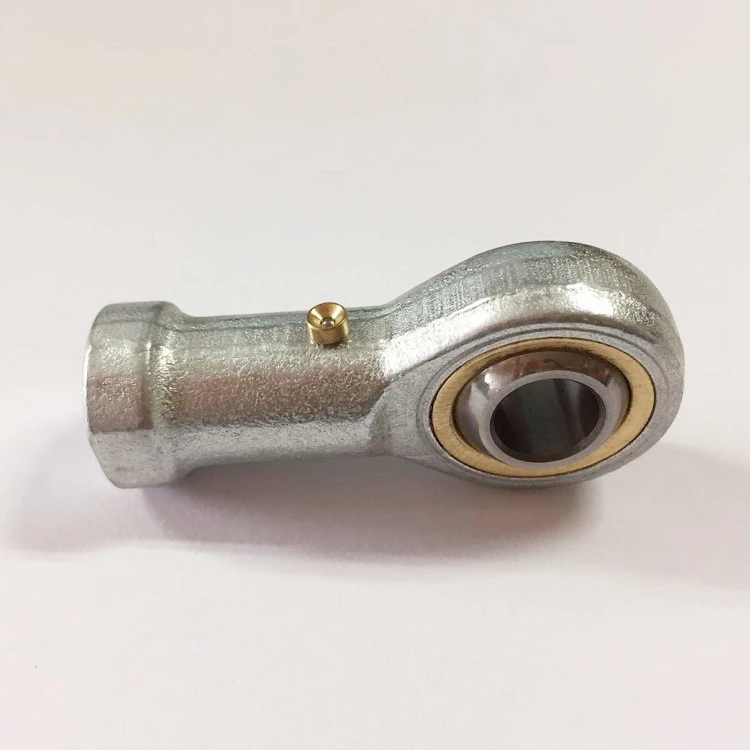 Since the outer spherical surface of the inner ring is inlaid with composite materials, the bearing can generate self-lubrication during operation. It is generally used for low-speed swinging motion, and it can also be used for tilting motion within a certain angle range.
When the eccentricity of the support shaft and the shaft housing hole is large, it can still work normally. Self-lubricating joints are used in water conservancy, professional machinery and other industries. Because the spherical sliding contact area of the spherical plain bearing is large and the inclination angle is large, most of the spherical plain bearings adopt special processing methods, such as surface phosphating, galvanizing, chrome plating or outer sliding surface lining, padding, spraying, etc. Therefore, it has a large bearing capacity and impact resistance, and has the characteristics of corrosion resistance, wear resistance, self-aligning, good lubricity or self-lubricating dirt pollution, and can work normally even if the installation is misplaced. Therefore, joint bearings are widely used in swing motion, tilt motion and low-speed rotary motion.
There are many designs of spherical bearings and rod ends and different combinations of sliding contact surfaces. Each design and combination has unique properties that make it particularly suitable for certain applications. Edit the type of radial spherical plain bearing to maintain. Maintenance-free spherical plain bearings Angular contact spherical plain bearings Spherical plain thrust bearings Rod ends. When selecting a bearing type and determining the required bearing size, the main factors that must be considered are load, bearing capacity and expected service life. The same is true when selecting rod ends. According to the GB/T9161 standard, its types can be divided into: curved rod ball joint bearings (type code: SQ); straight tee bearings (model code: SQZ);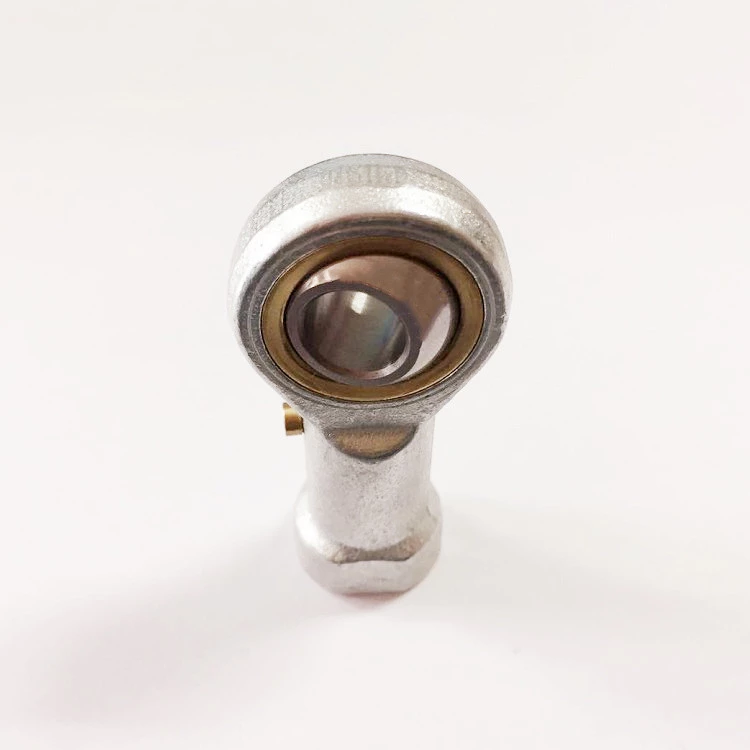
Single rod spherical open head rod end joint bearing (model code: SQD); left-handed internal thread assembled rod end joint bearing (model code: SLLB); left-handed external thread assembled rod end joint bearing (model code: SALB); left-handed bent rod End spherical plain bearing (model code: SLLB); Left-handed single rod end spherical plain bearing (model code: SQLD); Cylindrical welded rod end (cylindrical) (model code: SK); Flat bottom (square) welded rod end (Model code: SF); Locking rod end joint bearing (Model code: SLR). Edit the EH series rod end joint bearing (reinforced type) according to the size series; the end connection bearing EG series (reinforced type); the standard series of the inch rod end joint bearing (the size series code is Z);


K series end spherical plain bearings (dimension series code JK). Its structural material code and clearance group code are similar to spherical plain bearings. The invention is mainly used to support parts with low requirements on concentricity, high working surface pressure, and slow swinging and rotating motions. See GB/T304, 1-2002, GB/T304, 2-2002, GB/T304, 3-21102 and GB/12765-1991 for internal thread rod end joint bearing series. End joint bearings are sliding bearings, which are lubricated by wear-resistant non-metallic materials and lubricated by oil. GE20-ET, GE15-ET, etc. They are all spherical bearings, and the suffix is the specific type. Joint bearings are divided into GE, GEC, GEG, GEEW, GEK, GEH and other types, with different sizes and different lubrication methods. For details, please refer to the classification of sliding bearings in the mechanical design manual.
In the face of fierce market competition, we will definitely start from the customer's point of view. It is the corporate mission to make safer, more reliable and more stable Requiring Lubricated Female Right Hand Thread Steel/Bronze Rod End Bearing (PHS16 PHS16-1 PHS18 PHS20 PHS22 PHS25 PHS28 PHS30 PHS30-1 PHS...L Left Hand Thread) for you! Sincerely welcome customers to patronize, and we will wholeheartedly provide you with excellent services. We often conduct joint reviews to find out the causes of anomalies and seek improvement measures to achieve cost control and improve performance.