

As a needle bearing supplier, I understand the critical role that friction coefficient plays in the performance and longevity of needle bearings. A lower friction coefficient can lead to reduced energy consumption, less wear and tear, and improved overall efficiency. In this blog post, I will share some effective strategies on how to reduce the friction coefficient of needle bearings.
1. Material Selection
The choice of materials for needle bearings is fundamental in determining their friction characteristics. High - quality bearing steels, such as AISI 52100, are commonly used due to their excellent hardness, wear resistance, and low friction properties. These steels have a fine - grained microstructure that can withstand high contact pressures and reduce the tendency for surface adhesion, which is a major contributor to friction.
In addition to traditional bearing steels, advanced materials like ceramics are also gaining popularity. Ceramic materials, such as silicon nitride (Si₃N₄), have extremely low friction coefficients, high hardness, and excellent corrosion resistance. Needle bearings made with ceramic rolling elements can significantly reduce friction, especially in high - speed and high - temperature applications. For example, in some automotive engine components, ceramic needle bearings can operate with less heat generation, leading to better fuel efficiency.
2. Surface Finish
The surface finish of the bearing components, including the raceways and the needle rollers, has a profound impact on the friction coefficient. A smooth surface finish reduces the contact area between the rolling elements and the raceways, minimizing the frictional forces.

Precision grinding and polishing processes are commonly used to achieve a high - quality surface finish. The surface roughness of the raceways should be carefully controlled within a specific range. Generally, a lower surface roughness value (Ra) leads to lower friction. For instance, a surface finish with Ra values in the range of 0.02 - 0.1 micrometers can effectively reduce friction compared to a rougher surface.
Moreover, surface treatments such as superfinishing can further improve the surface quality. Superfinishing involves removing a very thin layer of material from the surface, resulting in a more uniform and smoother surface texture. This process can reduce the friction coefficient by up to 30% in some cases, enhancing the overall performance of the needle bearings.
3. Lubrication
Lubrication is one of the most important factors in reducing the friction coefficient of needle bearings. A proper lubricant forms a thin film between the rolling elements and the raceways, separating the surfaces and preventing direct metal - to - metal contact.
There are different types of lubricants available, including mineral oils, synthetic oils, and greases. Synthetic oils, such as polyalphaolefins (PAO), are often preferred for high - performance applications due to their excellent thermal stability, low viscosity - temperature coefficient, and good anti - wear properties. They can maintain a stable lubricating film even under high loads and high temperatures, effectively reducing friction.
Greases are also widely used in needle bearings, especially in applications where continuous oil supply is not feasible. The choice of grease depends on factors such as the operating temperature, speed, and load. For example, lithium - based greases are commonly used for general - purpose applications, while high - temperature greases containing additives like molybdenum disulfide (MoS₂) are suitable for applications with elevated temperatures.
Proper lubrication quantity is also crucial. Insufficient lubrication can lead to increased friction and wear, while over - lubrication can cause excessive churning losses and heat generation. Therefore, it is necessary to follow the manufacturer's recommendations regarding the lubrication amount and replenishment intervals.
4. Design Optimization
The design of the needle bearings can be optimized to reduce the friction coefficient. For example, the internal geometry of the bearing, such as the curvature of the raceways and the shape of the needle rollers, can be carefully designed to ensure a more uniform distribution of the contact stresses.
A well - designed bearing cage also plays an important role. The cage should be able to guide the needle rollers smoothly and maintain proper spacing between them. A cage with a low - friction design, such as a plastic cage, can reduce the frictional forces generated by the interaction between the cage and the rolling elements.
In addition, the preload of the bearing should be properly adjusted. An appropriate preload can improve the stiffness and alignment of the bearing, but excessive preload can increase the friction. Therefore, it is necessary to determine the optimal preload based on the specific application requirements.
5. Operating Conditions
The operating conditions of the needle bearings, such as speed, load, and temperature, can affect the friction coefficient. In high - speed applications, the centrifugal forces acting on the rolling elements can increase the contact stresses and friction. Therefore, it is necessary to select bearings with appropriate dynamic load ratings and design the lubrication system to ensure sufficient cooling.
High loads can also lead to increased friction. In such cases, bearings with a larger contact area or higher load - carrying capacity should be selected. Additionally, the temperature of the operating environment can have a significant impact on the lubricant properties. At high temperatures, the viscosity of the lubricant decreases, which may affect the formation of the lubricating film. Therefore, it is important to use lubricants with good thermal stability and adjust the operating temperature within an acceptable range.
Product Recommendations
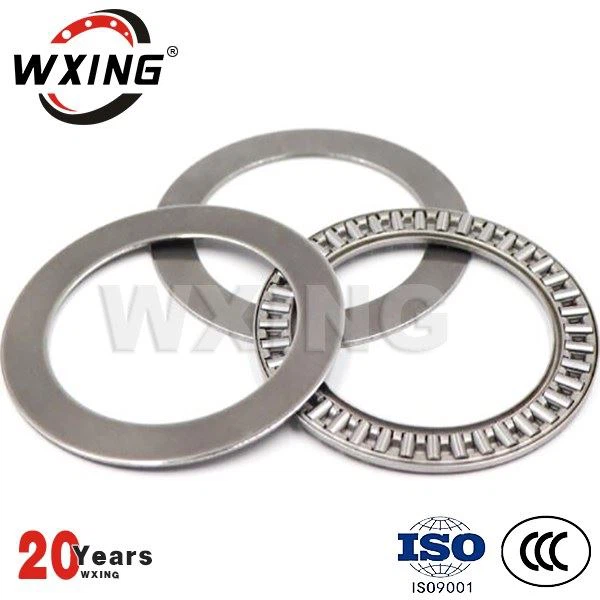
If you are looking for high - quality needle bearings, we offer a wide range of products. For example, our Needle Roller Bearing Single Row For Car is designed specifically for automotive applications, with excellent performance and low friction characteristics. The KR22PP Bearings are also popular choices, known for their reliability and durability. And our Flat Needle Roller Thrust Bearing AXK 5578 AXK6085 AXK0515TN Bearing is suitable for applications where thrust loads need to be supported with minimal friction.
Conclusion
Reducing the friction coefficient of needle bearings is a multi - faceted task that involves material selection, surface finish, lubrication, design optimization, and consideration of operating conditions. By implementing these strategies, we can improve the performance and efficiency of needle bearings, leading to longer service life and reduced maintenance costs.
If you are interested in our needle bearing products or have any questions regarding friction reduction in needle bearings, please feel free to contact us for further discussion and procurement negotiation. We are committed to providing you with the best solutions and high - quality products.
References
- Harris, T. A., & Kotzalas, M. N. (2007). Rolling Bearing Analysis. Wiley.
- Zaretsky, E. V. (2010). Ball and Roller Bearing Engineering. CRC Press.
- Bhushan, B. (2013). Handbook of Tribology: Materials, Coatings, and Surface Treatments. Wiley.