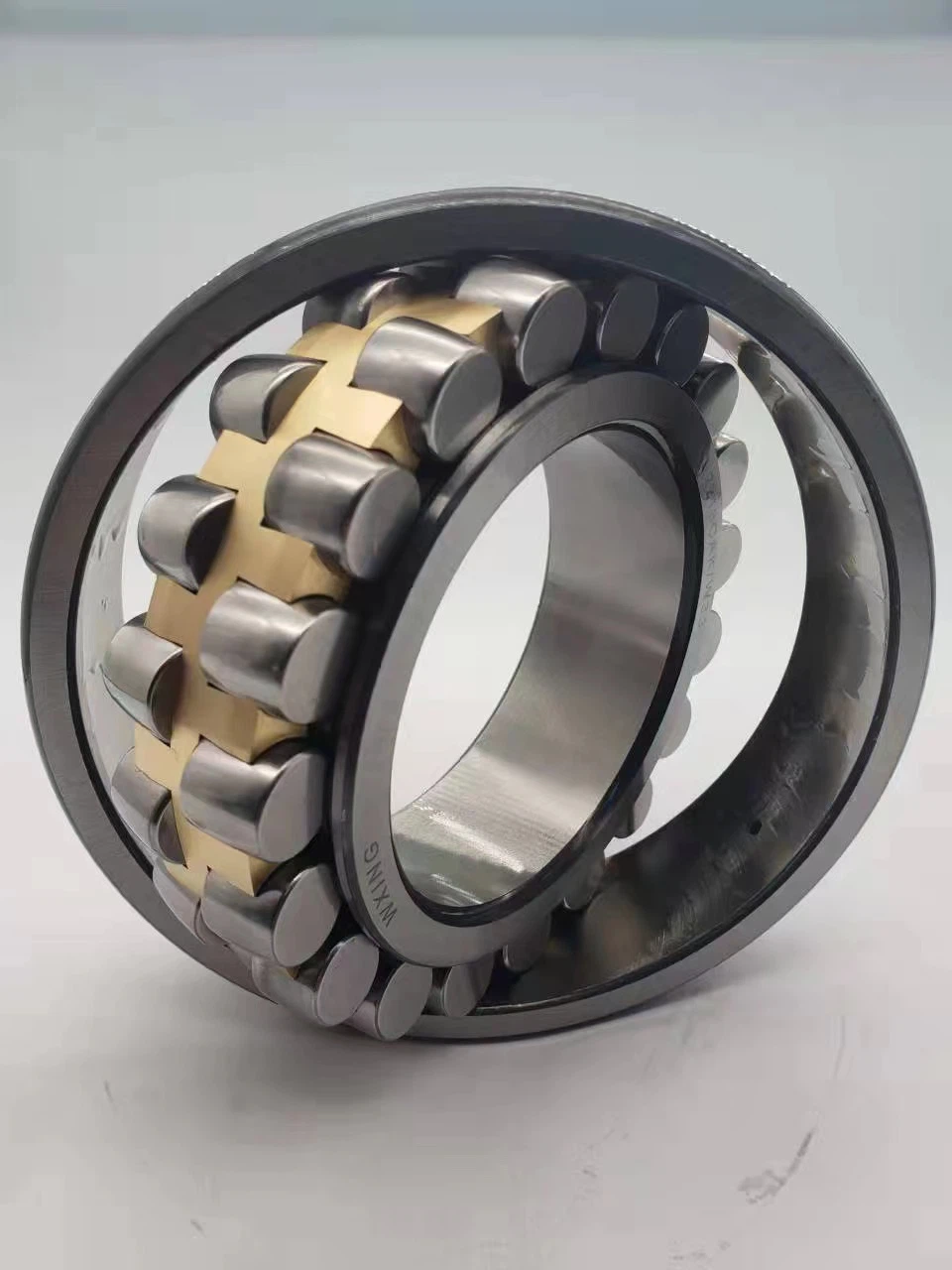
1. The matching surface of the bearing ring is worn, destroying the cooperation between the bearing and the housing or the shaft, causing the axis to deviate from the correct position, and abnormal noise will be generated during high-speed working movement.
2. Due to material fatigue, the metal on the surface peels off, resulting in an increase in the radial clearance of the bearing and abnormal noise.
3. Insufficient or improper lubrication, dry friction of bearings and broken bearings, etc., will also cause abnormal noise in bearing operation.
4. The bearing is worn and loose and the cage is loose or damaged.
In actual work, rolling bearings often do not generate noise. Bearing noise may also be the sound generated by the vibration of the bearing and the surrounding component structure. Many times a noise problem can be viewed as a vibration problem of the entire bearing application system.
1) The change in the number of loaded rolling elements causes resonance: If the bearing is subjected to radial load loading, the number of rolling elements carrying the load changes, which will cause a shift in the load direction, resulting in vibration.
(2) Partial damage: Improper operation or installation may damage the bearing raceway and rolling elements. During operation, the damaged component vibrates at a specific frequency. Damaged components can thus be analyzed via the vibration frequency.
(3) Accuracy of related parts: In the case of tight fit, the shape of the bearing ring may be deformed due to the cooperation with the related parts, and then vibration will be generated during operation.
(4) Pollutants: For bearings running in polluted environments, impurities entered by the rolling elements will vibrate.