

As a supplier of 51305 Thrust Ball Bearing, I've been getting quite a few questions lately about the impact of clearance on these bearings. So, I thought I'd take the time to dive deep into this topic and share what I've learned over the years in the business.
First off, let's talk about what clearance means in the context of ball bearings. Clearance is basically the amount of free movement between the bearing's moving parts, like the balls and the raceways. It's measured in different ways, but for our 51305 Thrust Ball Bearing, it really matters when it comes to how well the bearing performs.
One major impact of clearance is on the bearing's load - carrying capacity. If the clearance is too small, the balls in the 51305 Thrust Ball Bearing [/ball - bearing/thrust - ball - bearing/51305 - thrust - ball - bearing.html] won't have enough room to move. This can lead to increased friction and wear. When the balls can't move freely, they start to put extra stress on the raceways. Over time, this can cause the raceways to deform, reducing the bearing's ability to handle heavy loads. Imagine trying to squeeze a bunch of marbles into a small space - they'll push on each other and the walls, and things won't work smoothly.
On the other hand, if the clearance is too large, the bearing becomes less stable. The balls have more room to rattle around, which can cause vibrations. Vibrations are a big no - no in many applications. For example, in high - speed machinery, excessive vibrations can lead to noise, reduced precision, and even damage to other parts of the equipment. It's like having a loose wheel on your car - it'll make a lot of noise and can affect your driving experience.
The operating temperature also plays a role in how clearance impacts the 51305 Thrust Ball Bearing. Bearings tend to expand when they get hot. If the initial clearance is too small, the expansion due to heat can cause the bearing to bind up. This is extremely dangerous as it can lead to a sudden failure of the bearing. On the contrary, if the clearance is large enough to accommodate the thermal expansion, the bearing will continue to operate smoothly.
Let's take a look at some real - world applications. In industrial machinery, where precision and reliability are key, the right clearance in the 51305 Thrust Ball Bearing is crucial. For instance, in a conveyor system, the bearing needs to support the weight of the materials being transported while also allowing for smooth rotation. If the clearance is off, the conveyor might start to jerk or make strange noises, which can disrupt the entire production process.
In automotive applications, thrust ball bearings are used in various parts like the transmission. A 51305 Thrust Ball Bearing with improper clearance can lead to shifting problems. If it's too tight, the gears might not engage smoothly, and if it's too loose, there could be a loss of power transfer.
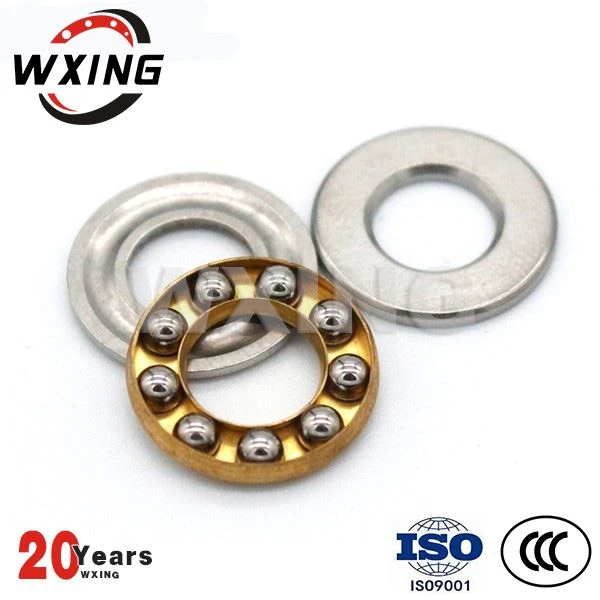
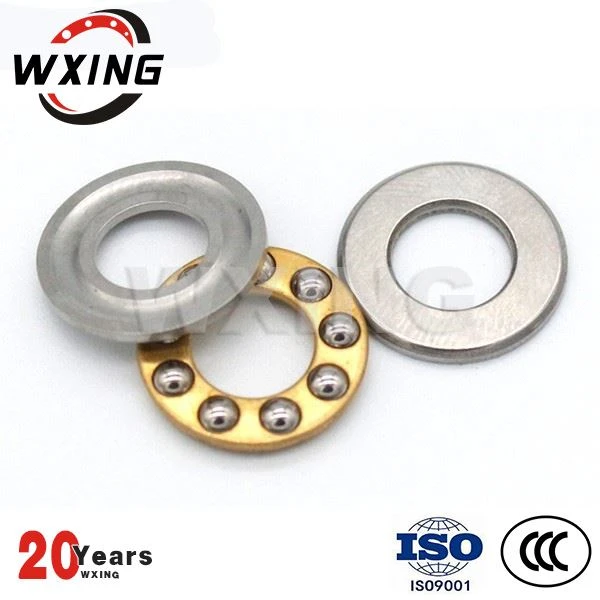
Now, let's compare our 51305 Thrust Ball Bearing with some other bearings in our catalog. The 51211 Bearings [/ball - bearing/thrust - ball - bearing/51211 - bearings.html] are similar in some ways but have different clearance requirements based on their size and application. The Eccentric Bearing Trust Ball Bearing 51310 [/ball - bearing/thrust - ball - bearing/high - quality - trust - ball - bearing - 51310.html] is designed for more specialized applications, where the clearance needs to be carefully calibrated to handle the eccentric loads.
The Thrust Ball Bearing F7 - 15M Chrome Steel [/ball - bearing/thrust - ball - bearing/thrust - ball - bearing - f7 - 15m - chrome - steel.html] has its own unique properties. Chrome steel bearings are known for their durability, but the clearance still affects their performance. If the clearance is not right, the corrosion - resistant properties of the chrome steel might not be fully utilized.
The 29420 Thrust Tapered Roller Bearings With Brass Cage [/ball - bearing/thrust - ball - bearing/29420 - thrust - tapered - roller - bearings - with.html] also rely on proper clearance. Tapered roller bearings are designed to handle both radial and axial loads, and the clearance impacts how well they distribute these loads.
As a supplier, I understand that getting the right clearance is a balancing act. That's why we work closely with our customers to understand their specific needs. We have a team of experts who can help you select the 51305 Thrust Ball Bearing with the optimal clearance for your application.
If you're in the market for high - quality thrust ball bearings, whether it's the 51305 Thrust Ball Bearing or any of the other bearings I've mentioned, we're here to assist you. We offer competitive prices, fast delivery, and excellent customer service. If you have any questions or want to discuss your bearing requirements in more detail, don't hesitate to reach out. We're always happy to have a chat and help you find the best solution for your business.
In conclusion, the clearance of a 51305 Thrust Ball Bearing has a huge impact on its performance, load - carrying capacity, and overall lifespan. By carefully considering the application, temperature, and other factors, you can ensure that your bearing operates at its best. So, if you're in need of a reliable bearing supplier, give us a chance to show you what we can do.
References:
- Bearing Handbook: A comprehensive guide on bearing technology and applications.
- Industrial Machinery Maintenance Manuals: These provide practical insights into the use of bearings in real - world industrial settings.
- Automotive Engineering Journals: Articles that discuss the latest trends and requirements for bearings in the automotive industry.